GETTING ARRESTED IN JAPAN
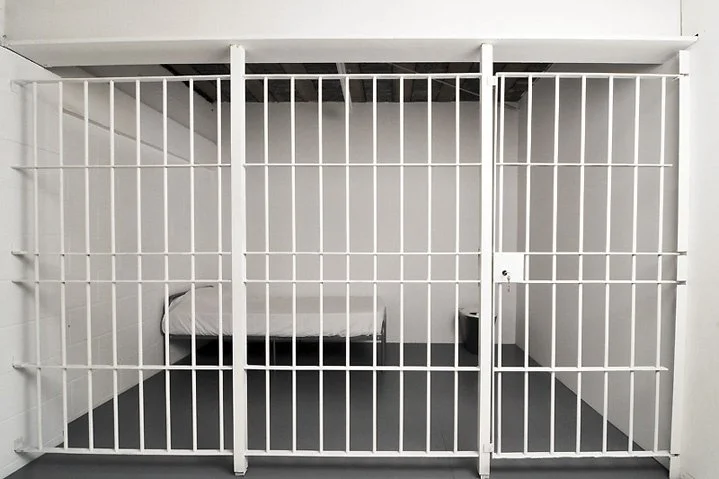
If you’re ever arrested or just curious here’s a first-hand breakdown of Japan’s detention system. what to expect, how it works, and what life is like inside.
Japan is often seen as one of the safest countries in the world, but that same strict order comes with laws that can catch people off guard. Something as small as getting into a heated argument in public, accidentally taking an item you didn’t pay for, overstaying a visa, or even grabbing someone else’s umbrella or bike thinking it was yours can escalate further than you could imagine and have you arrested before you’ve even had a chance to explain. If you are arrested, you won’t be taken straight to a courtroom. You will first be placed in a police-run detention center, where you’ll be held while the case is built. That’s why it is so important to understand what this place is and how it works before you ever find yourself inside it.
WHERE YOU’LL GO IF YOU GET ARRESTED IN JAPAN
A Japan detention center (called a kōchi-sho) is a secure facility where people are held after arrest while police investigate the case. It’s not a prison for long-term sentences. People stay here temporarily before being released, charged, or moved. In Japan, you can be held in a police detention center for up to 23 days for a single arrest before formal charges are filed. This usually starts with about 3 days of initial processing, followed by a 10-day detention period that can be extended another 10 days if approved. What many people don’t realize is that this clock can effectively reset if authorities make additional arrests on separate allegations, meaning the time can be extended far beyond 23 days. In some cases, people remain in detention for months, especially if charges are filed and they are waiting for the next step in the legal process. There are even situations where individuals have stayed in custody for several months after pleading guilty while awaiting deportation or transfer.
These detention centers aren’t built for comfort, they’re built for extreme pressure! Every detail, from the rigid schedules to the food, cell, isolation and constant surveillance, is designed to wear a person down mentally and physically. Sleep is disrupted, communication is limited and you’re only allowed to use Japanese. The days blur together as you waste away in a tiny white box with no windows to the outside while under strict control. The goal isn’t just to hold someone, it’s to exhaust them, to strip away any resistance, and to push them into confession. The prolonged isolation and intense interrogation conditions can break people down mentally, sometimes leading to false confessions just to end the experience.
HOW JAPAN IS DIFFERENT FROM THE US SYSTEM
The environment is strict, stressful, and highly controlled, with fixed routines and zero freedom. In contrast, in the United States, people are typically taken to a local jail, see a judge within a couple of days, and are informed of their charges quickly. They have the right to a lawyer during questioning and may be released on bail while awaiting trial. Overall, Japan focuses on investigating before charging, while the U.S. system moves faster into the legal process and court system.
This system is deeply flawed because innocent people can be locked inside these facilities for weeks or even months while proof of their innocence slowly moves through the system. They are powerless while their entire life outside is collapsing. Cut off from their family, pets their Jobs disappear, their income is cut off while they sit in an exhausting environment designed to torture them like a criminal. The constant pressure, isolation, and interrogation can push people to the edge, forcing confessions out of individuals who did nothing wrong just to escape the situation. By the time the truth finally comes out, the damage is already severe, leaving lasting psychological trauma and a life that may never fully recover.
I was one of the unfortunate innocent individuals who had to endure being locked up in this unjust system. I encountered many others like myself as well and an overwhelmingly amount of adults with special needs who clearly had difficulties functioning in a normal society and thus had no business being in a place such as this. They needed special care but instead of their needs being met or even understood they where thrown into detention facilities with little to no understanding of why or what was even going on.
INSIDE OF A JAPANESE DETENTION CENTER
When you first arrive at a detention center in Japan you are taken through intake, where you must remove your clothes for a full inspection while officers check your body and belongings. After that, you are given a detailed explanation of the rules, which are rigid and must be followed exactly. You will then be required to purchase basic necessities such as toiletries using your own money. Finally, you change into. loaned standard-issued clothing and are placed into your cell, marking the start of a highly controlled and regulated environment. You can not bring or keep anything including a bra or even your own underwear.
THE CELL

The cell is small all white box, roughly nine feet by eleven, with harsh fluorescent lights that stay on overhead, making it hard to relax or lose track of time. There is no bed, no furniture, nothing to sit on except the hard floor, which is covered in a thin, office-like carpet that offers no comfort. In one corner sits a toilet and sink, fully exposed, with a large viewing window so guards can see in at any time. There are no windows to the outside, no natural light, no sense of day or night. The only opening other than the intensely locked cell door is a small rectangular slot near the floor where your meals and paperwork is pushed through. The only items allowed in the room are a few pieces of loose tissue paper you use for the toilet and a small wash clothe to dry your hands on. Built to keep you confined, watched, and uncomfortable at all times. Not even a fly can get in. Probably the worst part, is depending on the place you could be put into a cell with up to 5 or more other people! Allowing only enough room to sit still against a wall unable to walk around or move freely.
THE ALL WHITE BOX
RULES
Rules inside a Japanese detention center are EXTENSIVE and strictly enforced without exception, controlling even the smallest details of daily life. You are expected to follow instructions exactly, including how you sit, move, and even when you are allowed to speak. Talking is only allowed when permitted, and communication is restricted to Japanese only. You cannot lie down or rest outside of designated hours, even if you are exhausted. Lights dictate your day, and you are not allowed to cover your face or block your eyes from the light even while sleeping. Showers are limited to once every five days on a fixed schedule. Meals must be eaten exactly as instructed, and nothing can be saved for later. You cannot look into other cells, make noise, or attempt to communicate with anyone nearby. Personal items are not allowed, and everything you have ( tissue and a wash clothe) must be layed out and inspected multiple times a day. There are no visitors, no privacy, and no freedom to make basic choices about your own routine. I wasn’t even allowed to use my blanket as a pillow, sleep on top of one of my blankets to give my body some extra cushion against the hard floor, take off my socks, wet the wash cloth with water, or put tiny pieces of tissue paper in my ears at night to block the noise (got in big trouble for that one). They even controlled which position/direction i could sleep in. They have rules for things you would never think aboout. It’s a lot to know and the only way to learn everything is just by trail and error so just be prepared to make a lot of mistakes and get yelled at a lot.
Typical Daily Schedule
6:00 AM – Wake up, lights on
6:30 AM – Roll call/ Cell inspection, morning routine (tenco)
7:00 AM – Breakfast (delivered through door slot)
8:30 AM – Fresh air/ brush hair, put on lotion and chapstick ( in an enclosed room that has a window leading outside on the ceiling that lets in fresh air)
ALL MORNING – Sit quietly in assigned position, possible questioning/interrogation
12:00 PM – Lunch
3:00 PM - Roll call/ cell inspection
ALL DAY – Continued sitting, silence, possible questioning
6:00 PM – Dinner
9:00 PM – Lights out, sleep
Schedule can vary slightly by facility, but this is the general structure. Although this was the schedule we often had may variations such as dinner at 5:00 PM instead of 6:00PM. If it is your day to take a shower Instead of allowing for that time in your long boring day you’re instead woken up early at 5:00AM to shower. Wake up time is listed as 6:00AM but truthfully you’ll be awake from 4:00AM due to all the noise. The same goes for bed time. They truly ensure you feel as many hours of the day as humanly possible.
THE FOOD
I cried one time. I arrived just before lunch time and when they slide me my first meal the tears just fell. 3 pieces of white bread, a few plain, cooked, cold pasta noodles (no sauce) and a bowl of hot water… ON THE FLOOR! Along with a used pair of disposable wooden chopsticks that shou'ld’ve been thrown out after their first use. I couldn’t believe this was real. It was as if I was found guilty of the highest crime known to man. They don’t even feed felons in a maximum security prisons this poorly. There was also a small fried croquette filled with various mystery items served with every meal. For the first 10 days I couldn’t even stomach the thing but with time I became too hungry to be picky any longer. Lunch was bread but breakfast and dinner they served rice. With Breakfast you could chose miso soup or tea so I had miso soup for breakfast everyday (only) which held me over for about 30 minutes. Dinner was similar to breakfast minus the soup. Everything is served cold and must’ve been prepared by a special catering company because it’s actually impossible to make food that tastes that bad, it had to of been done on purpose.
WHAT CAN YOU DO IN THERE?
Inside the cell, there is almost nothing you are allowed to do. You do not leave unless you are being taken for interrogation, meeting a lawyer, or for the brief, tightly scheduled moment to use the “fresh air room” to brush your hair in the morning. The rest of the time, you remain inside the same confined space. Reading is one of the only permitted activities, but even that is restricted to specific times and controlled conditions. Some facilities only allow Japanese books, and if you bring one in another language, it must go through inspection and translation before you are allowed to have it, which can take time and may even cost money. Writing is not freely allowed either. You cannot keep a notebook, and to use a pen you must request permission and fill out paperwork, only to use it for a limited period. Beyond that, there is nothing. No entertainment, no distractions, no way to pass the time. You are left alone with no one to talk to in an empty room with nothing to do but sit, wait, and endure. I passed the time by day dreaming and walking in circles which i would do on average for 4 hours a day until my knees hurt too much to continue. Keep in mind i was in a cell alone due to my health condition but the majority of others were in cells with multiple people making it impossible to move around. I don’t know what I would’ve done if I wan’t able to walk around in circles each day, I feel it was the only thing keeping me sane.
HOW THEY WEAR YOU DOWN
Food: Small, plain AWFUL meals with no choices, no snacks, nothing extra
Sleep disruption: Bright lights, strict schedules, constant noise, uncomfortable bedding, never being fully rested
Isolation: Alone in a room with no human interactions or comfort
No outside world: No windows, no fresh air, no sense of time or day
Mental exhaustion: Long, empty days with nothing to do but sit and wait to be interrogated or yelled at for something
Strict control: Every action, movement, posture, and word
Language barrier: Forced to communicate only in Japanese
No stimulation: No phone, no music, no distractions, nothing to escape into
Relentless routine: The same long, repetitive days over and over with no break
Your life outside being disrupted: Missing work, bills, family, friends, events, pets etc. The world going on while you’re stuck in here.
All of it works together to wear you down mentally and physically until you feel completely drained.
For me the order of most to least effective methods of torture would be:
MOST TO LEAST EFFECTIVE:
No stimulation/ mental exhaustion: Having nothing to do everyday all day more over a month was truly unbearable
No outside world: i’m already a very outdoorsy person but not being able to look out a window or see the sky for such a long period of time was shocking detrimental to me mental health
Outside life: I was so worried about my cat at home. She’s very shy and anxiety riddled, she only likes me and was being negelcted while i was stuck here for something i didn’t even do. not to mention my busy work life and all the things i had going on at the time.
Food: I have health issues and need to eat a pretty specific healthy diet. noth only was the food disgusting but pain pasta noodles and white bread everyday does not offer any nutritional vaule. More than the food beiing bad it was just not enough my stomach growled pretty much all day every day especially all night.
Sleep: The obvious disrespectful attempts to be noisy at night made me so frustrated i wanted to cry. I adveraged about 1 hours of sleep a day for the first week.
TIPS
Contact the embassy when you’re arrested! They can come visit you, explain the situation and facility as well as communicate your needs with the place and contact your family back home. They can also provide you with useful information and a list of attorney’s they recommend. Thanks to them I was able to be transferred into a cell by myself due to my health condition which was a huge help!
USEFULJAPANESE WORDS & PHRASES:
Even if you speak Japanese the vocabulary used in this situation could be unfamiliar to you. Here are some common words and phrases used in the detention facility.
ござ (goza) – floor mat / sitting mat
担当さん (tantō-san) – officer / staff in charge
弁護士と話したいです (bengoshi to hanashitai desu) – I want to speak to my lawyer
ノート (nōto) – notebook
本をもらえますか? (hon o moraemasu ka?) – Can I have a book?
今日は何日ですか? (kyō wa nan-nichi desu ka?) – What is today’s date?
気分が悪いです (kibun ga warui desu) – I feel sick
靴下 (kutsushita) – socks
新聞 (shinbun) – newspaper
髪をとかしたいです (kami o tokashitai desu) – I want to brush my hair
水をください (mizu o kudasai) – Please give me water
トイレに行きたいです (toire ni ikitai desu) – I need to use the toilet
わかりません (wakarimasen) – I don’t understand
英語を話せますか? (eigo o hanasemasu ka?) – Do you speak English?
すみません (sumimasen) – Excuse me / get attention
大使館の人が来ています (taishikan no hito ga kite imasu) – The embassy is here to see you
これから取り調べに行きます (kore kara torishirabe ni ikimasu) – You will go to a police interrogation
これから検察庁に行きます (kore kara kensatsuchō ni ikimasu) – We are going to the prosecutor’s office
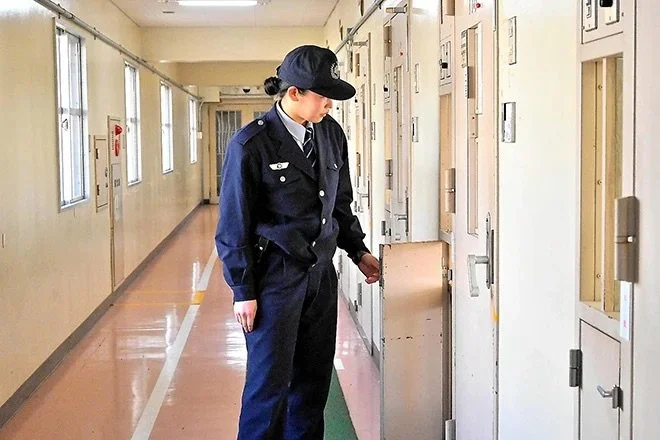
That is what this place is really like. I spent a total of 35 days here. The first arrest was 3 days of processing, the initial 10 days followed by the 10 days extension for a total of 23 days before my case was dropped. But the same time my case was dropped my accusers found a another reason to issue a second arrest keeping me there for an additional 12 days! Both cases were ultimately dropped and the second arrest was essentially tied to the first and shouldn’t have even been possible. But because of how the system works weather it’s a viable reason or not, they can still trap you in there for a time while the case is being reviewed. I met others who where there for shorter and much longer periods of time. The worst part was knowing i was innocent. After it’s all said and done you walk out and they act as if nothing happened. Not only was this was all extremely traumatizing but it cost me a HUGE of money that I really did not have and caused irreversible damage to my life. I’m sharing my story so that others can be aware of the dangers that lie within Japans so called Justice system.